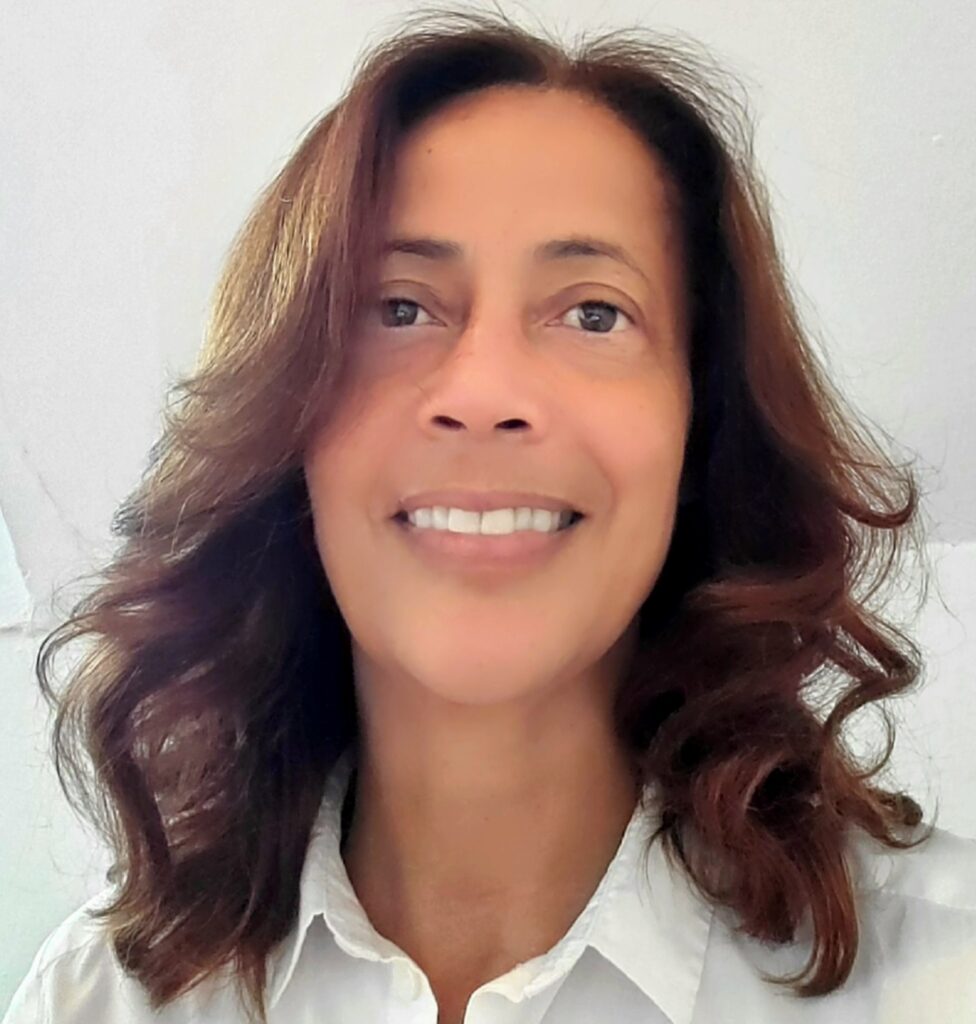
About Me
Psychologist, immigrant, intercultural specialist:
combining personal experience and global training for your care
My name is Gláucia Maria de Queiroz. I hold a degree in Clinical Psychology from Brazil, where the curriculum’s strong focus on practical training allowed me to immerse myself in psychoanalysis under the supervision of a highly esteemed professor who continued to mentor me throughout my early career. Building on this foundation, I earned an MSc from the University of Liverpool and completed my PhD at UAB in Lisbon. To further broaden my expertise, I pursued additional qualifications in family mediation and cross-border mediation, ensuring a comprehensive understanding of conflict resolution across diverse contexts.
Professional Experience
My career began in Brazil, where I gained extensive hands-on experience as a psychologist in private practice, under direct supervision. Alongside my clinical work, I contributed to academic research as a monitor in adult education at UFMG. I also served as a vocational counsellor and psychologist in a personnel department, and volunteered at a daycare centre, where I supported a child with partial cerebral palsy—an experience that deepened my empathy and adaptability.
After relocating to Germany, I established a private practice providing individual and couples therapy to adults, working with a diverse range of clients. My expertise in workplace mental health led to roles as a staff counsellor for diverse organisations including the United Nations (UNFCCC), Fairtrade International, among others. Additionally, I delivered intercultural training for global companies such as GIZ, Siemens, and Bosch, preparing German professionals for international assignments and fostering effective cross-cultural collaboration.
My professional training in the intercultural field, my own experience as an immigrant in Ireland, Paraguay, Portugal, and Germany, my work with binational couples, and the intense personal and professional contact with people from more than 30 different nations have directed me towards intercultural psychology. I decided that cultural dimensions would be the foundation of my therapeutic work.
Language Skills
In addition to Portuguese, my mother tongue, I am fluent in Spanish, German, and English, and conduct therapy and professional consultations in all four languages. This linguistic flexibility ensures that clients can express themselves authentically and that language is a bridge, not a barrier.
Glaucia Queiroz
Why an intercultural perspective?
Living in a foreign country for a long time, building a relationship with someone from another nationality, restarting personal and professional life in a new country, having to learn a new language and adapt to different habits—all of this opens new perspectives but can also overwhelm a person, causing stress, anxiety, conflicts, and psychological or psychosomatic symptoms. Despite the significant number of foreigners living in countries like Germany, there is still a shortage of therapeutic help specialised for immigrants. This is often because professionals have limited knowledge about the client’s culture or underestimate the role of language barriers and intercultural misunderstandings—even when the language is well mastered.
In my view, when working with foreign clients, an intercultural perspective must be a guiding principle of the therapeutic work. This certainty comes from my international professional experience, my personal journey as an immigrant, and from new academic theories in this area. Notions such as cultural dimensions and the experience with the “Other” cannot be underestimated in this context.
My therapeutic work is tailored for immigrants living in Europe, European professionals engaging with Latin American colleagues or clients, and binational couples worldwide. I provide services in four languages, ensuring that language is a bridge, not a barrier.
Make Contact
Take the First Step Towards Well-Being
Your mental health knows no borders.
Intercultural Psychology
Therapy provided in English, German, Spanish, and Portuguese.
Clinical Psychologist – UFMG (Brazil)
MSc – University of Liverpool (UK)
PhD – Universidade Aberta (Portugal)